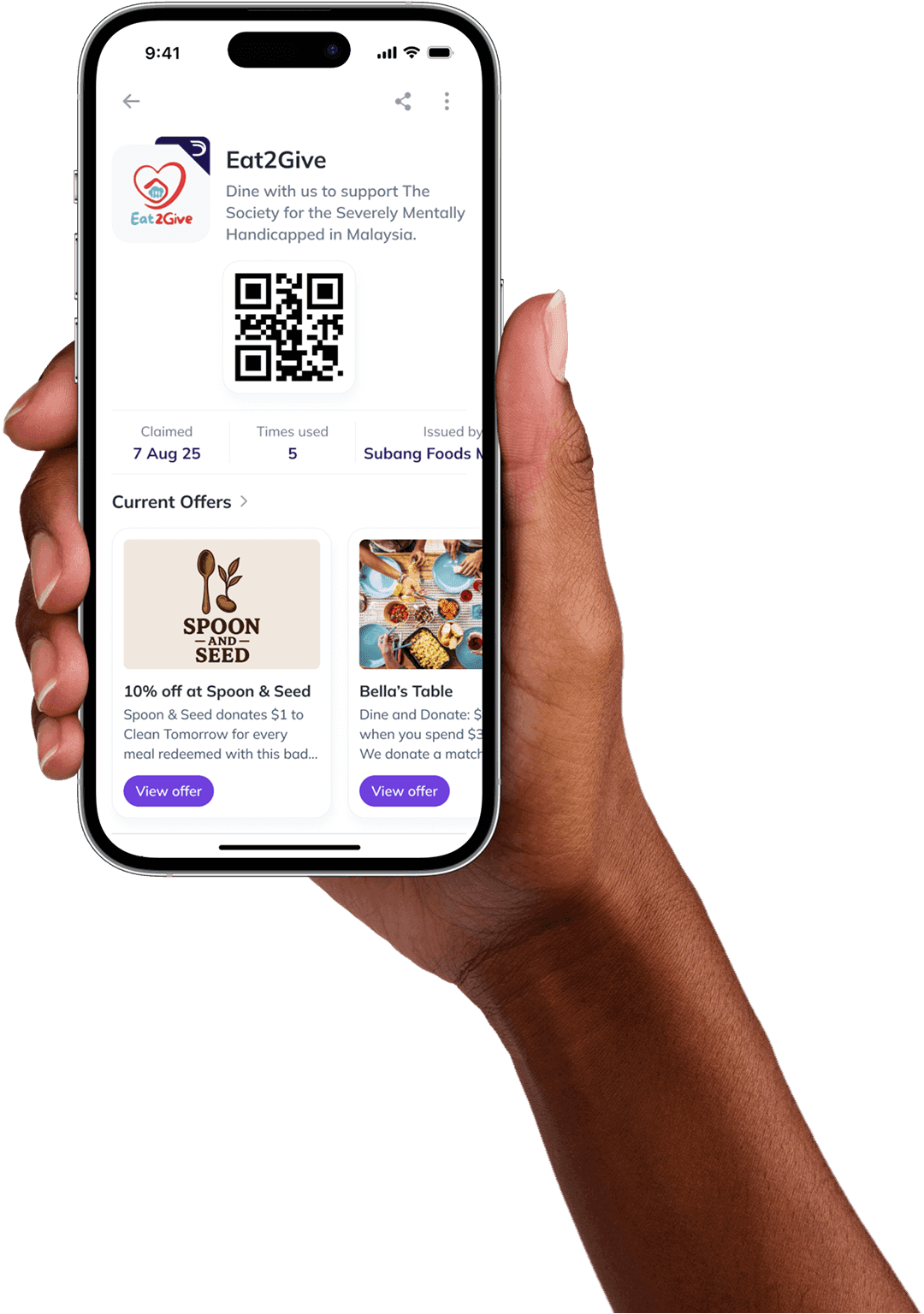
Intro
CheckD is a multi-sided data verification platform built on Dataswyft’s self-sovereign data infrastructure.
For individuals: CheckD allows users to own and manage their data in a secure wallet. By claiming proofs (badges), they can verify data and use it across real-world and digital experiences.
For organizations: CheckD provides a trusted ecosystem to verify and validate user data while minimizing data sharing to maximize data security and autonomy.
My role focused on redesigning the product end-to-end to improve clarity, system scalability, and user understanding across all roles in the ecosystem.
Project Meta
Role
Company: Dataswyft
Head of Product Design
Timeline
July 2025–October 2025
Contributors
Product Owners: Olia Antoniou, Matt Chung
Head of Product Design: Liz Hixon
UX Designers: Liz Hixon, Asya Orekhova
Engineers: Terry Lee, Kenneth Kostrešević
Contribution
I led the 3-month UI/UX redesign for the CheckD web app and contributed to product strategy across the entire data-verification lifecycle. My contributions included:
Experience Architecture – Redesigned the app’s information hierarchy for various user types: Holders, Issuers, Data Verifiers, and Validators.
Design Systems – Implemented a scalable design system based on NativeBase (gluestack UI) and expanded it as new components emerged.
End-to-End Product Design – Created flows for badge claiming, data sharing, issuer onboarding, and QR-based interactions.
Technical Alignment – Collaborated with engineers, product owners, and stakeholders to ensure UI reflected the underlying data ownership protocols.
Documentation & Clarity – Produced user guides and workflow documentation to align design, engineering, and leadership.
Demo-Driven Iteration – Designed the UX for multiple demo environments (including Kuza’s Stockist Pathway) used for stakeholder presentations, hackathons, and enterprise onboarding.
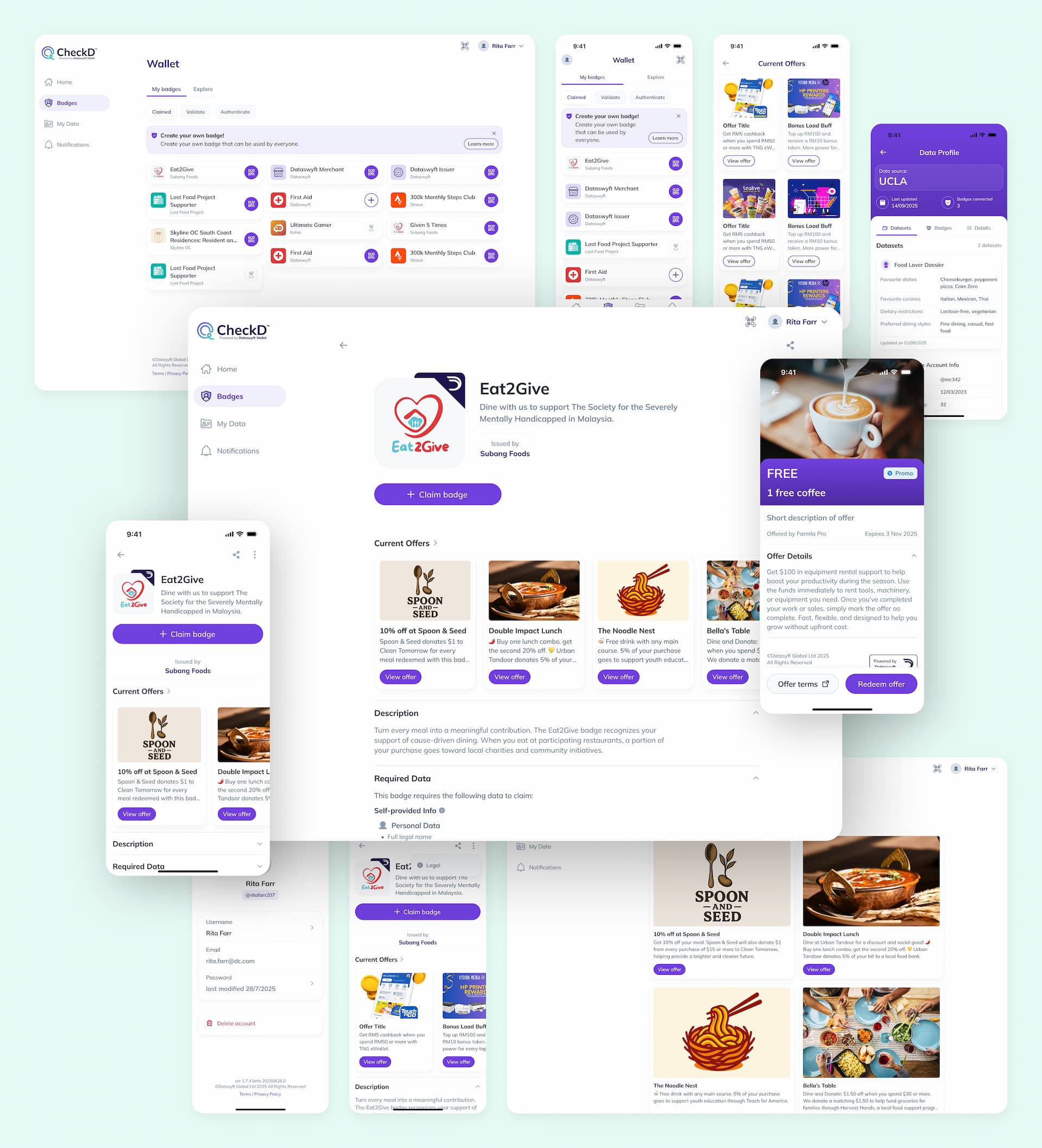
Background
CheckD is powered by the Dataswyft Wallet ecosystem, a decentralized model where users legally own their data. Instead of transferring or storing personal information, organizations (“Issuers”) issue badge templates that require specific verified data points.
The ecosystem involves multiple role types:
Holders – individuals managing their data and claiming (“holding”) badges
Issuers – organizations issuing badges by defining badge rules and required data
Verifiers – entities (either API-driven or human) confirming data accuracy, enabling a Holder to claim a badge
Validators – individuals affiliated with the issuing organization who validate badge authenticity, usually via scanning, when a user chooses to use a badge
When I joined, the product had strong technical foundations but lacked a user-oriented architecture. Concepts like verification, authentication, and validation were difficult to distinguish. Flows to claim badges were inconsistent. My task was to make the system intuitive, scalable, and demo-ready for enterprise clients.
Process
Product Audit
Together with Asya, we conducted a deep audit of internal documentation, engineering logic, and existing UI flows. We mapped the complete badge lifecycle from issuer creation to holder use, including claiming, verification, and validation.
This allowed us to unify internal language, remove ambiguity, and create a consistent conceptual model across the product.
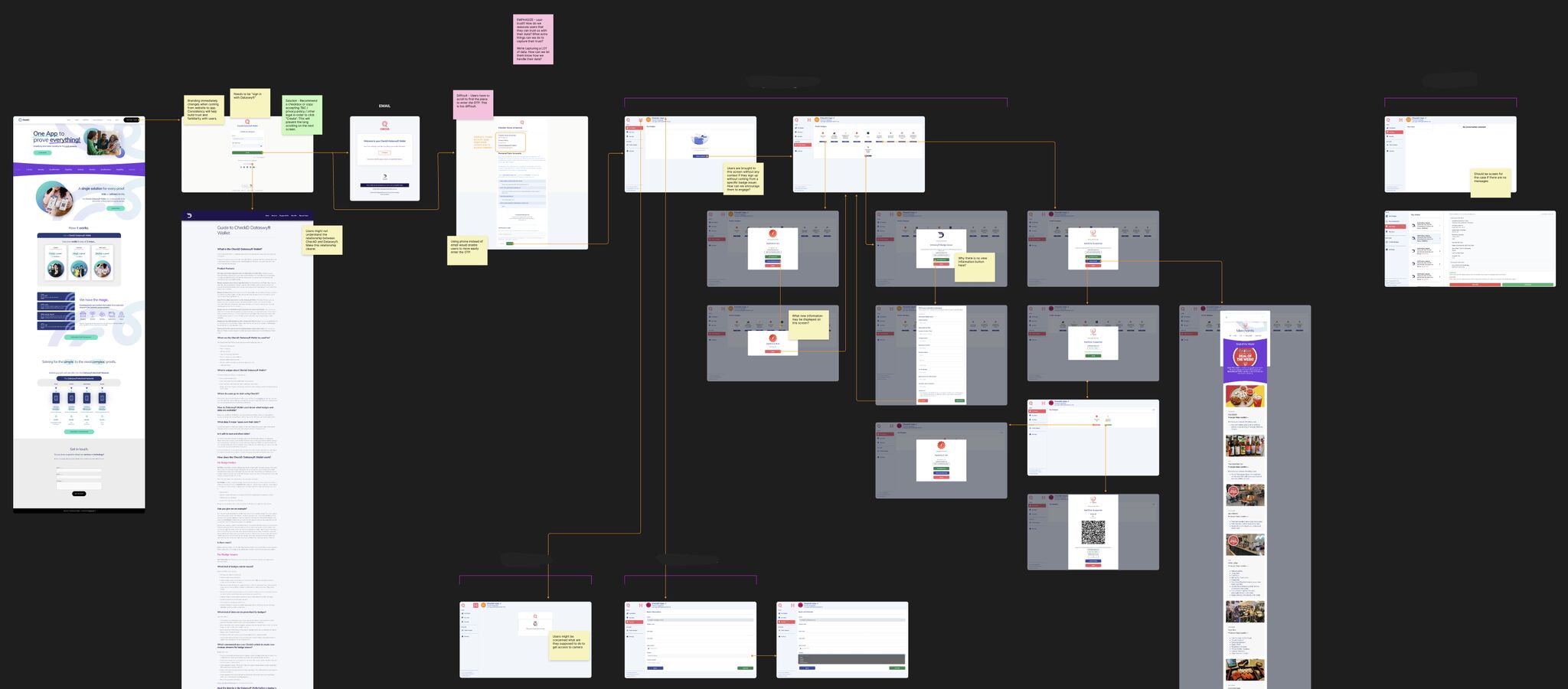
Existing product audit, documented with flow arrows and annotations
Restructuring Navigation & User Roles
We redesigned the sitemap around core tasks, resulting in a clearer structure. The new framework supports all role types while keeping the experience lightweight for Holders.
Recommendations & Improvements
Working closely with leadership and engineering to understand existing protocols, I pushed to challenge assumptions. “If it doesn’t make sense to me, it won’t make sense to users.”
One major improvement was simplifying the process of claiming and using a badge. Originally, the CTA to place a badge into the wallet was “Authenticate,” a confusing term. While some badges could be authenticated automatically, some required data verification and some required the Holder to scan an Authenticator’s QR code.
Once a badge was in the wallet, the CTA to use the badge was “Validate.” And the concept of “verification” was unclear – was a badge verified? was the data verified?
Even in company onboarding, staff members thought that “authentication,” “verification,” and “validation” were interchangeable terms in the Dataswyft ecosystem. This was evidence of a need for major simplification and better role definitions.
I challenged the assumption that users needed to understand the technical underbelly for each action. “User’s need to know how to use it and that it works; they don’t need to know how or why it works.”
Through many iterations, we greatly simplified the process and terminology while adhering to all technical protocols. We removed all mentions of “authentication” and eliminated the workflow that required a QR scan to claim a badge. Now users simply “Claim” a badge and, if necessary, provide or connect to the required data in the process. Holders no longer see “validation” or “verification” either – they are simply guided on how to use the badge once it’s claimed and can view a “✓ Checked by…” label on any data that has been verified by a third party.
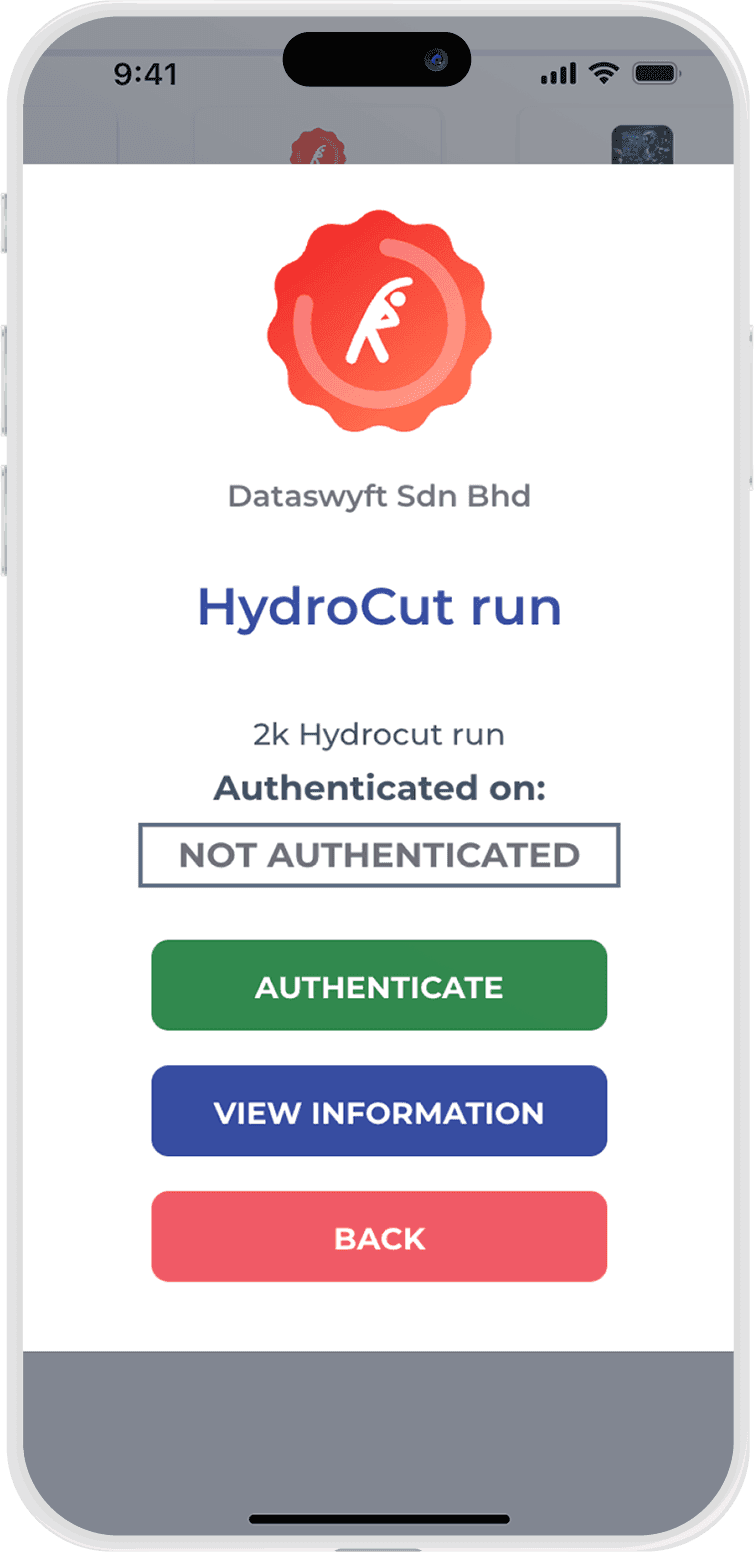
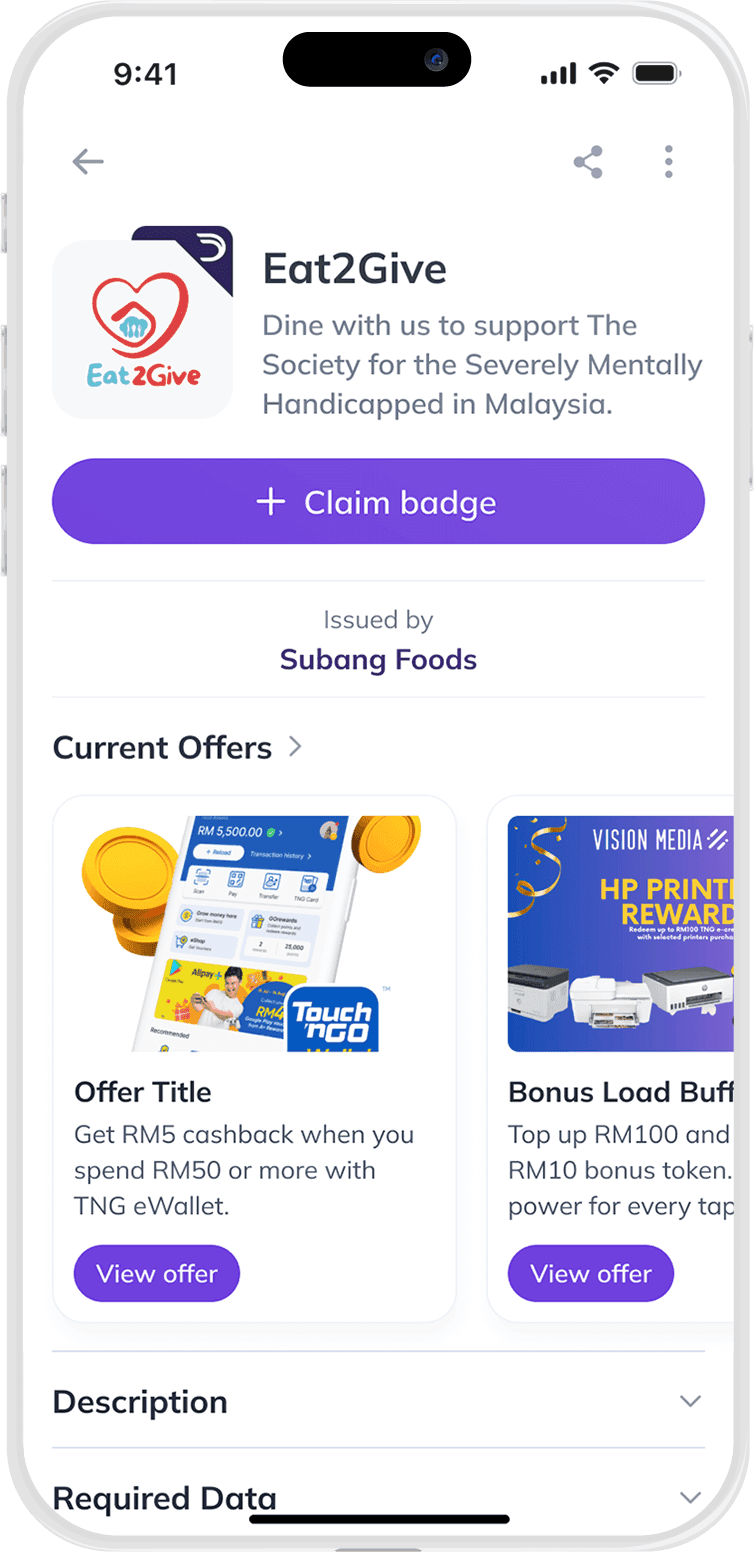
Badge detail screen, before (left) and after (right)
Visual Design
Because data autonomy requires user trust, establishing a trustworthy brand was essential. When moving from the CheckD website to the CheckD web app, brand colors and styles changed, which created questions about authenticity. The web app’s interface also looked dated, which gave the impression of outdated technology. I led a brand alignment workshop with company leadership to determine a direction for the overall visual design of the app. Multiple iterations resulted in a simple, streamlined design that was modern, clean, and reflected the trust we hoped users would place in our brand.
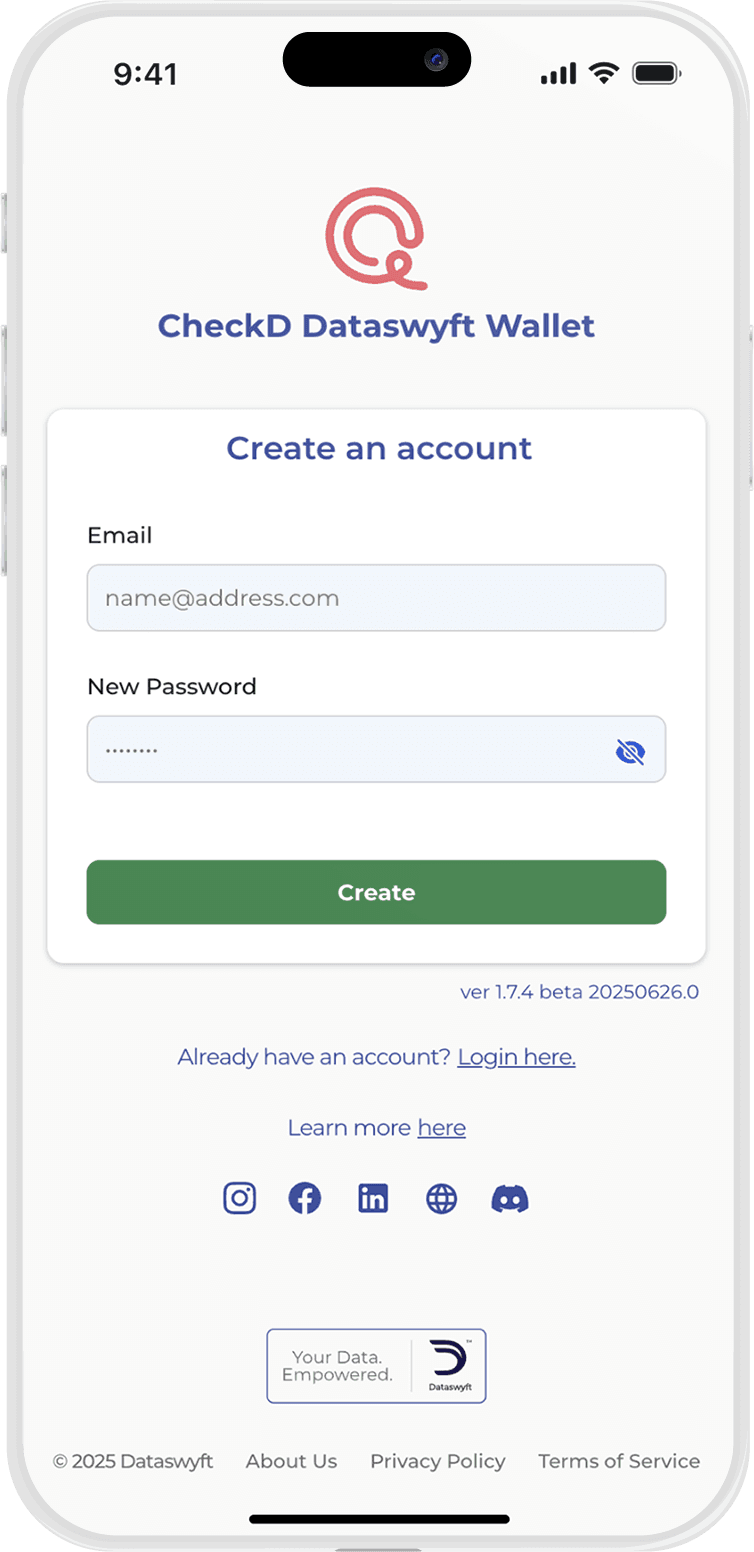
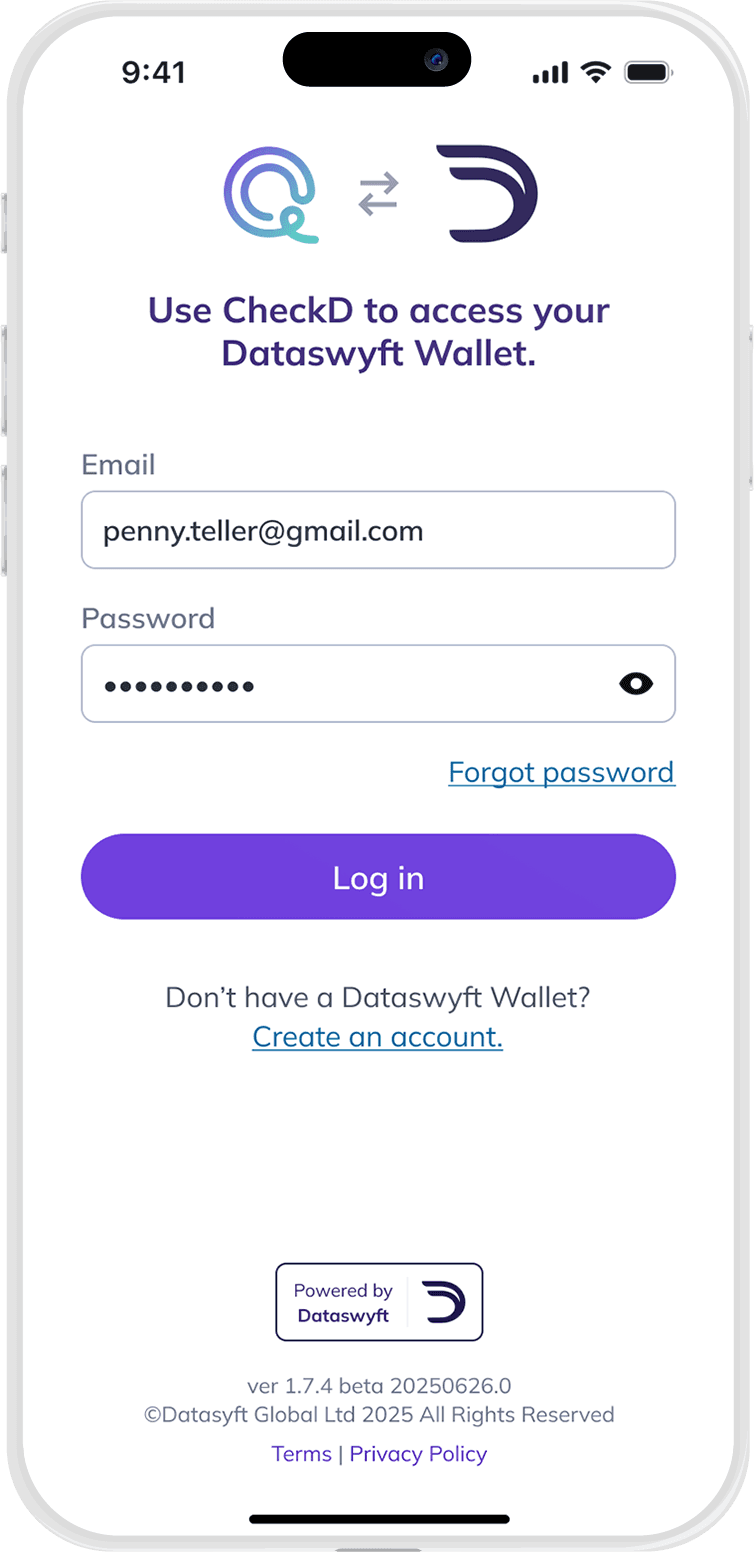
Login screen before (left) showing brand inconsistencies and after (right) showing a simplified and streamlined interface
Design System
Using NativeBase’s gluestack UI as the foundation, I implemented and customized Cypher, Datasywft’s design system. I worked with detailed tokens, adaptability for theming, and patterns tailored to Dataswyft’s brand, architecture, and complex user roles.
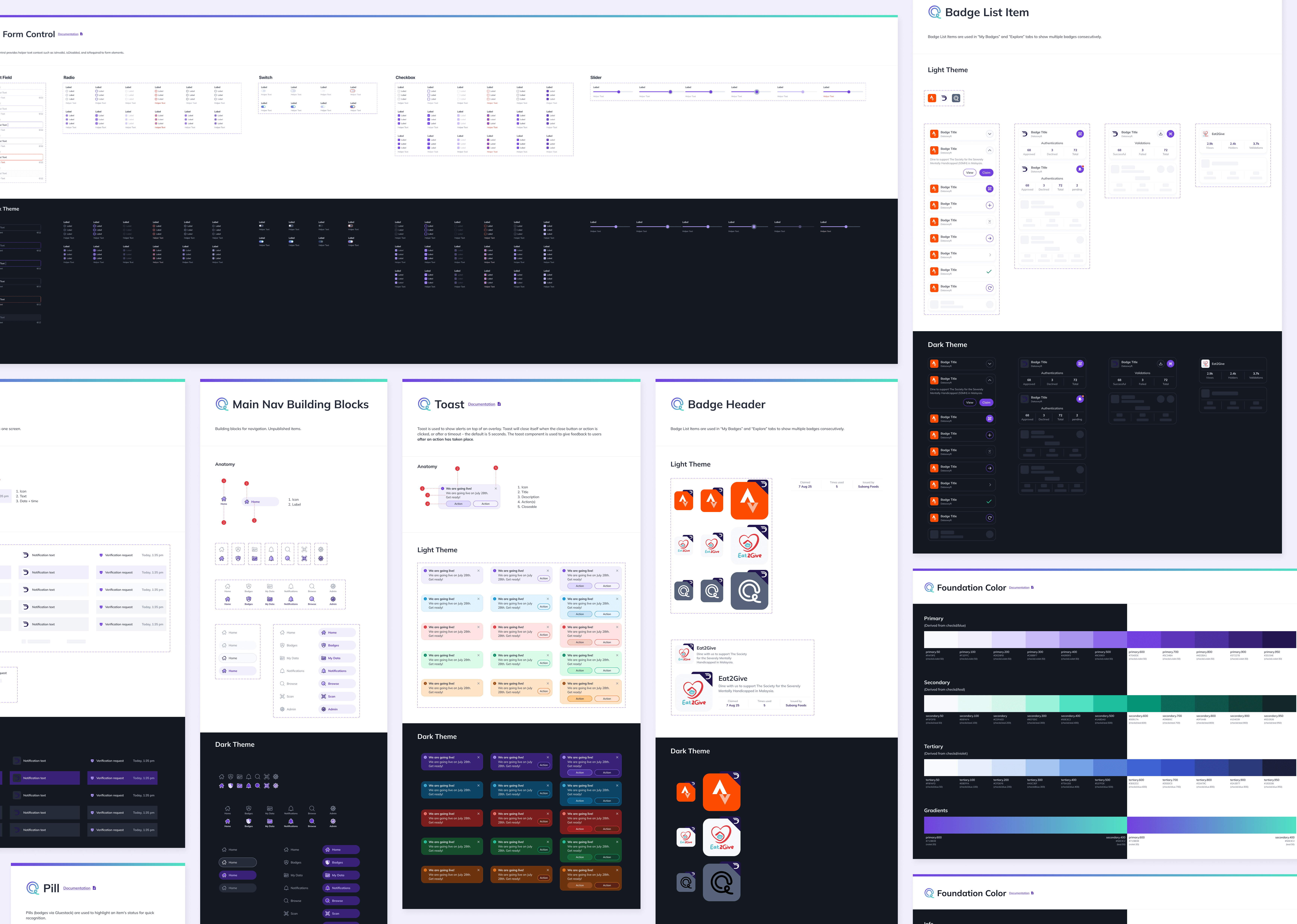
A sample of components and styles from Dataswyft’s Cypher design system
Outcomes
Overview
The redesigned navigation and conceptual clarity eliminated confusion around user roles and data flows. The Cypher design system supports scalability as Dataswyft adds automated API-connected data verification, richer data profiles, and more issuer autonomy.
Overall, the improved UX played a direct role in successful demos for Kuza One and other clients, accelerating adoption.
Awards
The CheckD app, customized for Kuza One, won 1st place in the GLEIF vLEI Hackathon.